
核心定位与通道配置
硬件性能与控制功能
通信接口与应用场景
Core positioning and channel configuration
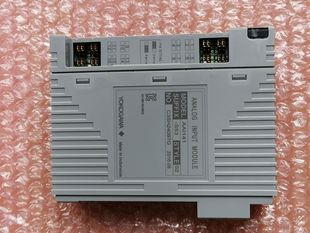
Device type: Digital output module (compatible with ST 7 system).
Channel specification: It has the output capability of 64 channels and supports controlling a large number of external devices simultaneously, effectively improving the flexibility of the system.
Electrical isolation: Adopting an isolation design, every 16 channels share a common negative electrode (common negative side every 16 channels) to ensure the safety and stability of signal transmission.
Hardware performance and control functions
High precision output: With the characteristics of high precision and low drift, it can accurately control the on/off status of external devices such as actuators, valves, relays, etc., ensuring the stability of the output signal.
Advanced Modulation Function: Supports Pulse Width Modulation (PWM) and Time Proportional Output, enabling precise control of devices such as motors and valves.
Programmable control: supports users to achieve flexible control logic by configuring parameters or writing programs, meeting diverse application scenario requirements.
Environmental adaptability: The working temperature range is wide, and it can work normally in an environment of -10 ℃ to 55 ℃, suitable for various complex industrial sites.
Communication Interface and Application Scenarios
Communication capability: Typically equipped with Ethernet, RS-485 and other communication interfaces, it facilitates data exchange with other devices or systems, enabling remote monitoring and control.
Widely used: mainly applied in industrial automation control systems, process control, and environmental monitoring. For example, parameter measurement and control in the chemical, petroleum, and power industries, as well as precise control of production lines, robots, and packaging machinery.